Strathmore vehicles lead two kinds of lives — one on the busiest highway in the country and one on the gravel grid of irrigated farmland. Both are hard in their own way.
01The Trans-Canada is hard driving
A lot of Strathmore commutes into Calgary on Highway 1 — roughly a hundred kilometres round trip, most of it at highway speed, sharing the road with long-haul trucks. That traffic throws up gravel, chunks of tire tread and road debris all year, and sprays brine all winter.
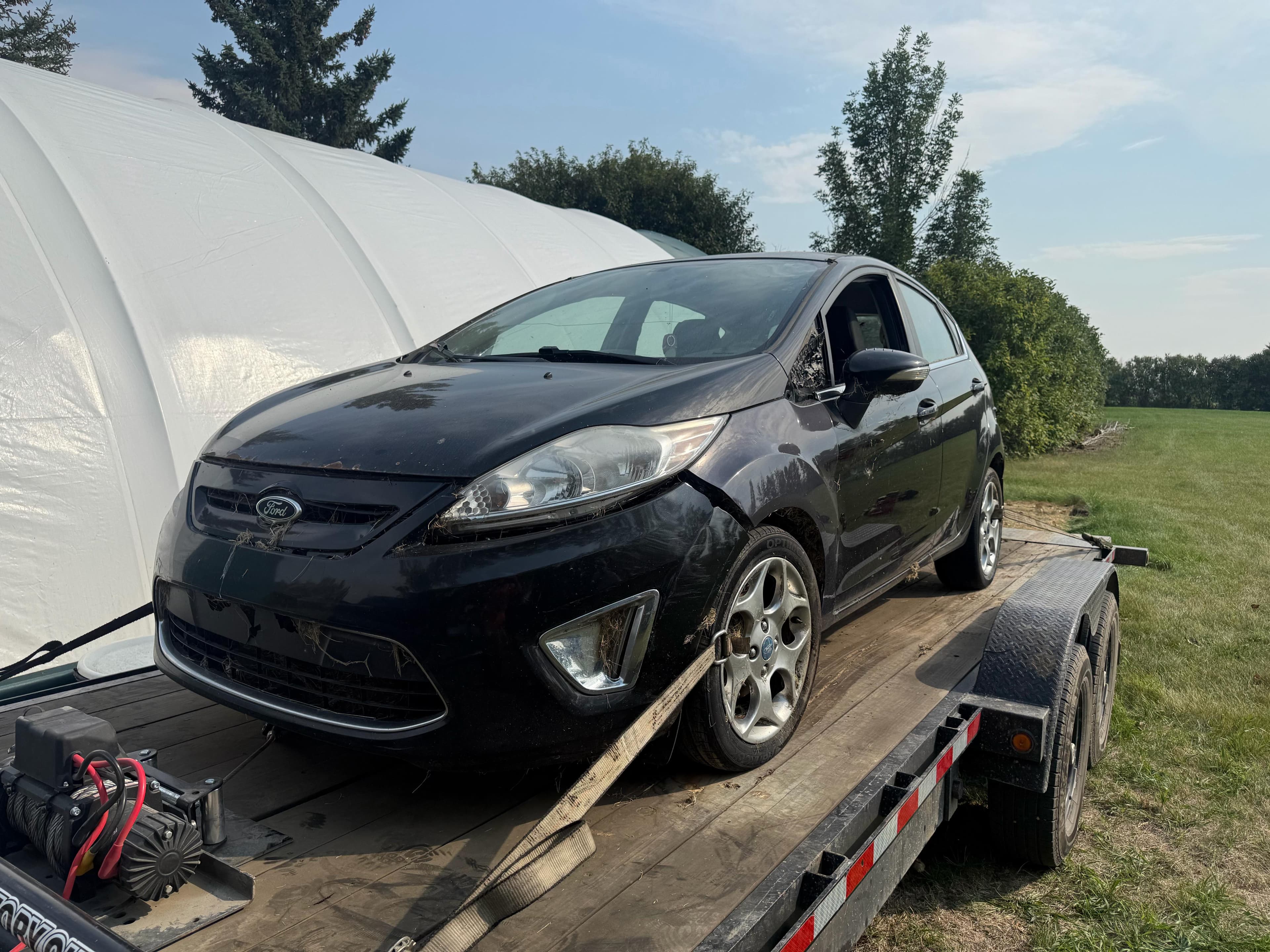
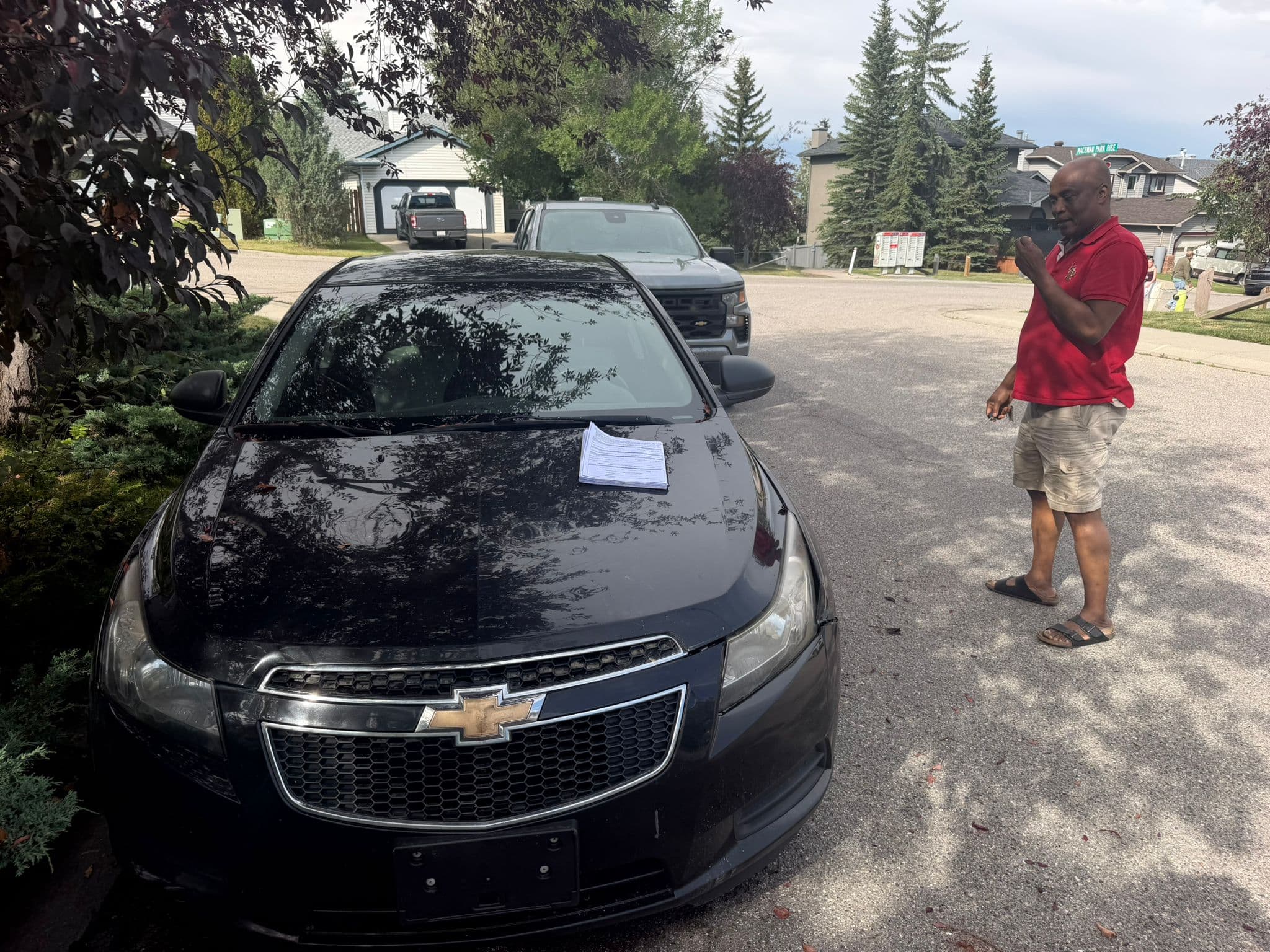
The result is a recognisable Strathmore vehicle: chipped and cracked windshield, pitted paint across the hood and front bumper, and corrosion underneath from years of highway spray. Cosmetically rough, often mechanically fine — until the kilometres finally catch up with the transmission or the engine.
02Irrigation-district gravel
Strathmore sits in the heart of land served by the Western Irrigation District, and the grid of gravel roads and canal access routes around it is where farm vehicles spend their lives. Washboard, dust and loose gravel wear suspension, steering components and undercarriages far faster than paved driving ever would.
03Wheatland County farm trucks
Grain, cattle and irrigated crops mean trucks of every size — half-tons, one-tons, grain trucks and service units. They work hard, they're rarely traded in, and when they're retired they usually stay in the yard beside the bins. A single visit often clears several.
04Wind, dust and hail
Open prairie means wind, and wind carries dust and grit that sandblasts paint and works into door seals and window channels. Summer hail tracks across the county as well, writing off vehicles that are otherwise perfectly sound.